


Air New Zealand Scraps Profit Forecast as Jet Fuel Surges Toward $200


Key Highlights:
- Air New Zealand Ltd suspends FY2026 earnings guidance amid extreme fuel volatility
- Jet fuel prices jump from $85–$90 to as high as $150–$200 per barrel
- Crack spread widens dramatically, exposing airlines to refining margins
- Airline warns further fare increases and schedule changes may follow
- Shares trade around $0.405 on the ASX on March 10
The turbulence gripping global energy markets has now reached the airline industry.
Air New Zealand Ltd has suspended its FY2026 earnings guidance after a dramatic spike in jet fuel prices triggered by escalating tensions in the Middle East.
The airline said jet fuel prices have surged from roughly US$85 to US$90 per barrel before the conflict to between US$150 and US$200 in recent days, creating extreme uncertainty for airline profitability.
The announcement highlights the mounting pressure on global carriers as fuel costs threaten to derail financial forecasts and push airfares higher.
Shares of Air New Zealand were trading around $0.405 on the ASX on Tuesday afternoon, giving the airline a market value of roughly $1.3 billion.
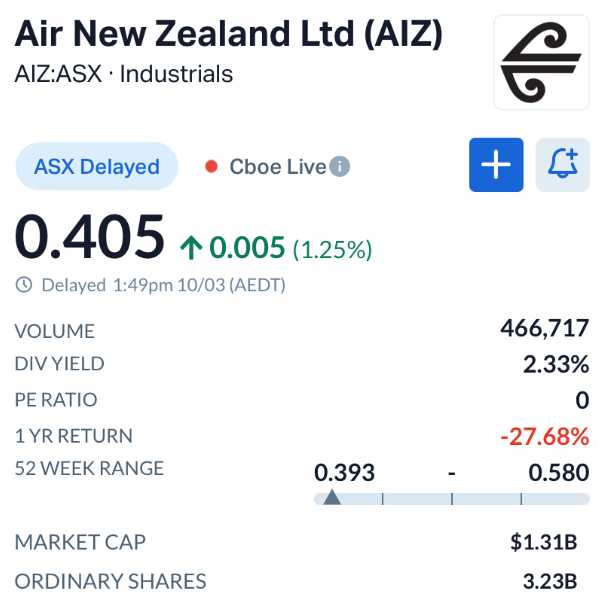
Source: MarketIndex
A forecast grounded by fuel volatility
Only two weeks ago, the airline had offered cautious guidance for the second half of the financial year.
At its February interim results, management indicated that earnings for the remainder of FY2026 would likely be similar to or slightly below the first half, which already delivered a $59 million loss.
That outlook assumed jet fuel prices averaging US$85 per barrel.
But the sudden surge in energy costs has rendered those projections obsolete.
“Due to this unprecedented volatility, the jet fuel price assumption underlying Air New Zealand’s 26 February 2026 guidance is no longer appropriate,” the airline said in its market announcement.
With fuel costs now fluctuating wildly, the company has chosen to withdraw guidance entirely until conditions stabilise.
The hidden factor: refinery margins
For airlines, the cost of fuel is not determined solely by crude oil prices.
Jet fuel pricing includes two components. The first is the price of crude oil such as Brent. The second is the “crack spread”, the refinery margin between crude oil and refined jet fuel.
According to Air New Zealand, the crack spread has widened dramatically during the current crisis.
Before the conflict it sat near US$22 per barrel. Since then it has surged to as high as US$115 per barrel, amplifying the cost shock for airlines.
This widening spread means airlines are paying significantly more for refined jet fuel even when crude prices themselves are volatile.
Limited protection from hedging
The airline has some protection against rising oil prices.
Air New Zealand said it is 83 percent hedged against Brent crude for the second half of FY2026.
However, those hedges do not shield the company from the widening refinery margin.
Like most global carriers, the airline remains exposed to the crack spread, which has become the primary driver of jet fuel costs.
For context, the airline expects to consume around 2.9 million barrels of fuel between March and June, meaning even small price shifts can significantly affect operating costs.
Fare increases and schedule changes possible
To offset rising fuel costs, the airline has already begun adjusting ticket prices.
Management confirmed that initial fare increases have been implemented, with further price adjustments possible if high fuel costs persist.
The airline also warned that it may need to adjust its flight network and schedules, which could reduce capacity on certain routes.
For travellers, the message is clear: higher airfares may be on the horizon.
Fuel typically represents one of the largest operating costs for airlines, often accounting for 20 to 30 percent of total expenses, according to industry data.
When fuel prices spike sharply, airlines often pass part of the cost onto passengers through higher ticket prices.
A broader aviation warning sign
Air New Zealand’s move is being closely watched across the aviation sector.
Stay ahead of the market
The most important stories, delivered to your inbox. No noise, just what matters.
By subscribing, you agree to our Privacy Policy.
When a national carrier suspends earnings guidance, it signals that market conditions have become unusually unpredictable.
Other airlines across the Asia Pacific region could face similar challenges if fuel prices remain elevated.
Many carriers are still recovering from pandemic disruptions and ongoing supply chain issues affecting aircraft engines and maintenance schedules.
Air New Zealand itself flagged engine return schedules and operational uncertainty as additional risks affecting its outlook.
The bigger picture
The airline’s warning comes amid wider turbulence in global markets driven by energy prices.
In recent weeks, oil volatility has rattled stock markets, triggered sharp swings in airline shares and raised concerns about rising travel costs.
Historically, aviation has been highly sensitive to energy shocks.
During previous oil crises, including those in the 1970s and early 2000s, airlines faced severe margin pressure and were often forced to raise fares or cut capacity.
While the current situation is still evolving, the sudden surge in jet fuel prices has already forced Air New Zealand to rethink its financial outlook.
For now, the airline says it will focus on cost reduction initiatives while monitoring fuel markets closely.
Until prices stabilise, the skies ahead for airline profitability remain uncertain.
Source: Air New Zealand market announcement, market data - March 10, 2026.
What is your take on this story?
Disclaimer - Skrill Network is designed solely for educational and informational use. The content on this website should not be considered as investment advice or a directive. Before making any investment choices, it is crucial to carry out your own research, taking into account your individual investment objectives and personal situation. If you're considering investment decisions influenced by the information on this website, you should either seek independent financial counsel from a qualified expert or independently verify and research the information.