


Algorae Pharma Expands AI Drug Discovery Push with Peter Mac Cancer Partnership


Key Highlights:
- Algorae Pharmaceuticals partners with Peter MacCallum Cancer Centre for second validation program
- 24 high-priority drug combinations to be tested across four cancer types
- Proprietary AI platform AlgoraeOS v2 drives candidate selection
- Preclinical results expected within six months
- Stock up 260% over the past year, reflecting rising interest in AI-driven biotech
Algorae Pharmaceuticals has announced a fresh collaboration with the Victorian Centre for Functional Genomics at Peter MacCallum Cancer Centre, marking another step in its push to validate artificial intelligence-driven drug discovery.
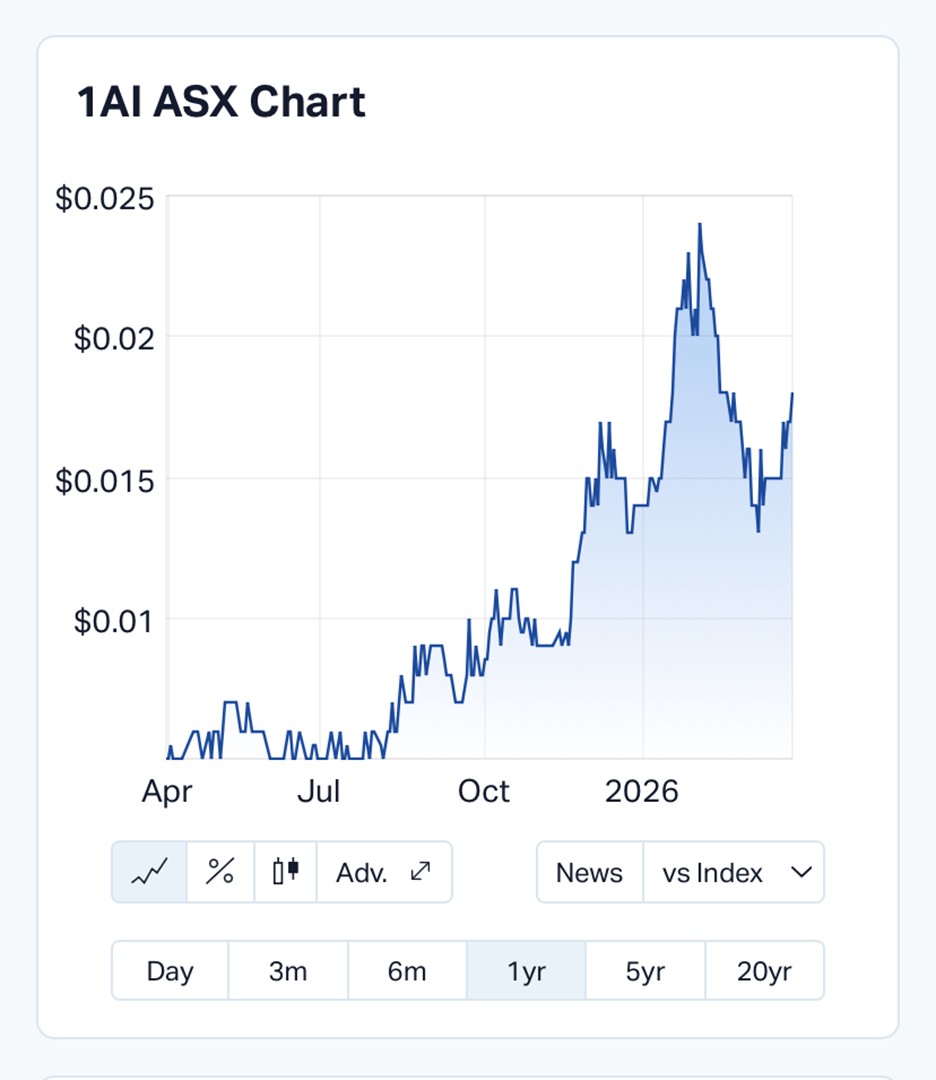
1AL 1-year share price index | Source: MarketIndex
From Algorithms to the Lab Bench
The agreement centres on testing predictions generated by Algorae’s proprietary platform, AlgoraeOS version 2.
The company uses artificial intelligence to identify combinations of existing drugs that may work better together than alone.
The latest program will focus on 24 high-priority drug combinations, selected from an initial pool of 90 candidates identified through AI screening.
These combinations will be tested across four cancer types:
- Glioblastoma
- Rhabdomyosarcoma
- Melanoma
- Chronic myelogenous leukaemia
The work will be carried out using high-throughput screening technologies, designed to rapidly assess how different drug combinations interact at a cellular level.
Why his Matters
Drug development is notoriously slow and expensive.
Traditional approaches can take over a decade and cost billions of dollars, with a high failure rate.
Algorae’s approach aims to change that equation.
By using AI to narrow down the most promising combinations before entering the lab, the company is effectively trying to reduce both time and cost.
Its AlgoraeOS v2 platform has already evaluated more than 500,000 potential drug combinations across 170 cell lines, a scale that would be difficult to achieve through manual research alone.
The platform also incorporates advanced modelling techniques that assess not just potential effectiveness, but also confidence levels and biological relevance.
This allows researchers to prioritise candidates with a higher probability of success.
Bridging Prediction and Proof
While AI can generate promising insights, validation remains the critical step.
That is where the partnership with Peter Mac comes in.
Chief Scientific Officer Dr James McKenna described the collaboration as a key milestone:
“We are excited to be building on the foundations of our initial work with the VCFG team at the Peter MacCallum Cancer Centre. This program represents an important step in the development of AOS2 as we continue to bridge the gap between in silico prediction and biological validation.”
The phrase “in silico” refers to computer-based predictions, while “biological validation” means testing those predictions in real-world laboratory conditions.
The goal is straightforward. If the AI is right, the company moves closer to clinical development. If not, the model is refined.
A Six-Month Window
The timeline for the program is relatively tight.
Data analysis will be completed within weeks of each screening phase, with the full dataset expected within six months.
This rapid turnaround reflects the efficiency of high-throughput screening methods, which can test thousands of interactions simultaneously.
Importantly, the study includes built-in decision points, allowing researchers to refine the process as data emerges.
Commercial Implications
Beyond the science, the commercial angle is clear.
Successful validation could open several pathways:
- Advancing selected candidates into clinical trials
- Licensing drug combinations to larger pharmaceutical companies
- Expanding the platform into new therapeutic areas
Executive Chairman David Hainsworth highlighted the broader significance:
“This second agreement with Peter Mac marks another significant milestone for Algorae. AlgoraeOS v2 represents a major advancement in our AI prediction capabilities, and we are delighted to collaborate again with Australia’s premier cancer research institution on this validation program.”
The Bigger Picture: AI in Drug Discovery
Algorae’s strategy sits within a wider industry shift.
Global pharmaceutical companies are increasingly investing in artificial intelligence to improve success rates in drug development.
The logic is simple. Better data leads to better decisions.
While companies like DeepMind have demonstrated the power of AI in protein modelling, smaller players like Algorae are applying similar principles to drug combinations and treatment optimisation.
Stay ahead of the market
The most important stories, delivered to your inbox. No noise, just what matters.
By subscribing, you agree to our Privacy Policy.
In this context, Algorae’s claim that its platform outperformed some state-of-the-art models in calibration and prediction adds a layer of credibility to its approach.
Market Snapshot
Shares in Algorae were trading at $0.018 as of early afternoon, up nearly 6 percent on the day.
The stock has delivered a 260 percent return over the past year, albeit from a low base, reflecting growing interest in AI-led biotech plays.
With a market capitalisation of around $30.9 million, the company remains firmly in micro-cap territory.
That positioning often comes with higher risk, but also higher potential upside if its technology delivers.
A Dual Business Model
What sets Algorae apart is its dual approach.
Alongside its AI-driven discovery platform, the company also operates a commercialisation arm, supplying generic and specialty medicines in Australia and New Zealand.
This provides a degree of operational grounding, while the AI platform offers longer-term growth potential.
The Road Ahead
For now, the focus is on data.
The next six months will determine whether Algorae’s AI predictions translate into measurable biological results.
If they do, the company could move from concept to credibility in the highly competitive biotech space.
If not, it will still gain valuable insights to refine its platform.
Either way, the experiment continues.
What is your take on this story?
Disclaimer - Skrill Network is designed solely for educational and informational use. The content on this website should not be considered as investment advice or a directive. Before making any investment choices, it is crucial to carry out your own research, taking into account your individual investment objectives and personal situation. If you're considering investment decisions influenced by the information on this website, you should either seek independent financial counsel from a qualified expert or independently verify and research the information.