


ASX Climbs Despite Rate Hike as Energy Surge Offsets Economic Jitters


Key Highlights
- S&P/ASX 200 rises 0.21% to 8,632.7 points
- RBA rate hike passes with a narrow 5–4 split, softening future hike expectations
- Energy sector leads gains as oil hovers above $US102 per barrel
- Tech stocks rebound, while banks lag on growth concerns
- Market signals a “resilience phase” despite inflation and geopolitical risks
The Australian share market is doing something that often confuses even seasoned observers. It is rising at a time when interest rates are going up and global tensions are heating up.
By mid-afternoon, the S&P/ASX 200 had climbed 0.21 percent to 8,632.7 points, shrugging off the immediate impact of the Reserve Bank’s latest rate hike.
It is what market watchers call a “climb the wall of worry” session. The headlines are negative, but prices are holding firm.
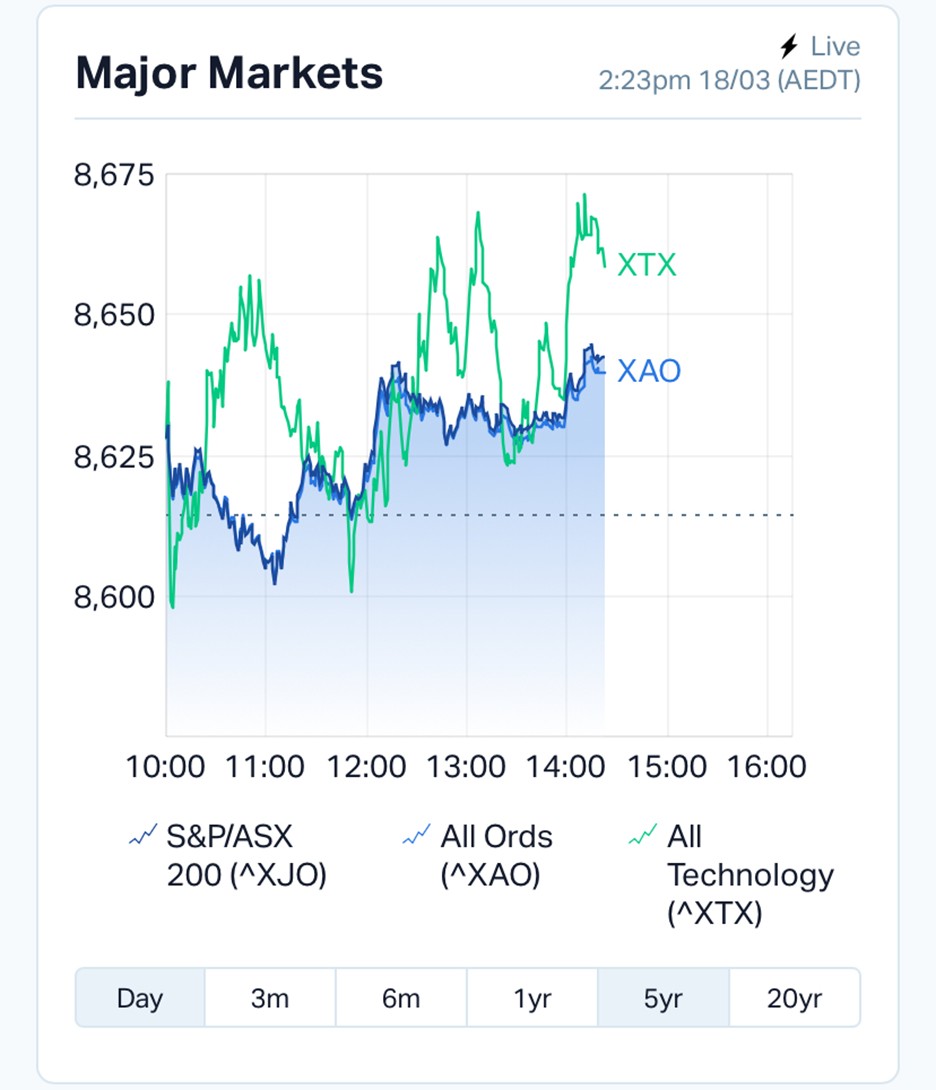
Source: MarketIndex
The rate hike paradox
The Reserve Bank’s decision to lift rates was expected. What surprised the market was how close the decision came to going the other way.
The vote split 5–4, revealing a central bank that is no longer unified in its outlook.
That detail has shifted expectations almost instantly.
Markets are now pricing only about a 40 percent chance of another hike in May, a sharp drop from earlier forecasts.
Westpac Chief Economist Luci Ellis captured the mood, noting that while further tightening remains possible, the central bank is becoming “less certain” as it balances inflation against slowing economic momentum.
Oil, conflict and the new inflation threat
While interest rates dominate local headlines, global events are driving the bigger narrative.
Tensions in the Middle East, particularly around key energy infrastructure, have kept oil prices elevated.
Brent crude remains above $US102 per barrel, after briefly spiking higher earlier in the session.
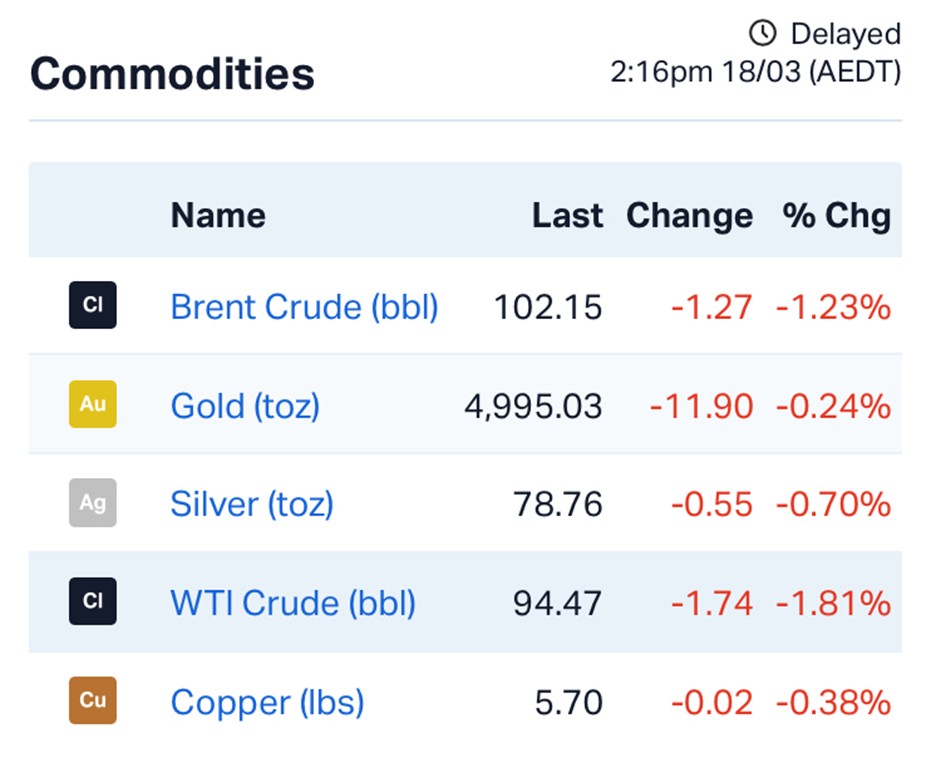
Source: MarketIndex
This matters because oil acts like a hidden tax across the economy.
Higher fuel costs flow through to transport, manufacturing and eventually consumer prices.
Analysts warn that sustained oil prices above $US100 could slow global growth while keeping inflation stubbornly high.
That is the dilemma central banks now face. They are trying to control inflation that is increasingly being driven by global supply shocks rather than domestic demand.
A market split in two
Beneath the surface, the ASX is telling a story of divergence.
Winners: Energy and Tech
Energy stocks are leading the charge, with the sector up around 0.95 percent, benefiting directly from higher oil prices.
At the same time, technology stocks are staging a quiet comeback. The ASX All Technology Index rose 0.70 percent, tracking strength in global markets.
Names like Electro Optic Systems Holdings Ltd and Weebit Nano Ltd are among the day’s notable movers, reflecting renewed interest in growth sectors.
Losers: Banks and Gold
On the flip side, financial stocks are struggling.
The ASX 200 Banks Index slipped 0.25 percent, as investors weigh the impact of higher rates on loan growth and potential credit stress.
Gold miners are also under pressure, with the gold sub-index down 0.43 percent, as bullion prices eased slightly to around $US5,003 per ounce after a strong run.
Corporate moves and market momentum
Corporate developments are adding another layer to the day’s trading.
Recycling giant Sims Ltd jumped more than 8 percent after forecasting a doubling of earnings by FY26, highlighting how industrial demand remains resilient despite macro concerns.
Meanwhile, energy-linked names like New Hope Corporation Ltd gained over 6 percent, riding the broader commodities wave.
Defence and technology stocks also featured prominently among top gainers, underscoring the market’s shift toward sectors tied to global structural trends.
Global backdrop: Asia surges, Wall Street steady
Overnight, Wall Street provided a modest but supportive lead.
The S&P 500 rose 0.25 percent, while the Nasdaq gained 0.47 percent, marking a second consecutive day of gains.
Stay ahead of the market
The most important stories, delivered to your inbox. No noise, just what matters.
By subscribing, you agree to our Privacy Policy.
But the real momentum is coming from Asia.
Markets across the region are firmly in the green, with strong gains reflecting optimism around a tech-led recovery and resilient global demand.
Earlier sessions saw major indices like the Nikkei and KOSPI post sharp gains, reinforcing a broader risk-on sentiment across Asian markets.
The bottom line: A market rising, but not relaxed
The S&P/ASX 200 is up 0.21% at 8,632.7, yet the divergence beneath the surface tells a more complex story.
Energy stocks are climbing alongside Brent crude above $US102, while financials are slipping, with the banks index down 0.25%. Gold is easing, and rate-sensitive sectors remain fragile.
At the same time, expectations for another rate hike have dropped to around 40%, reflecting a central bank that is no longer fully convinced on its own tightening path.
That combination creates a market caught between inflation pressure and policy uncertainty.
The current rally is being supported not by broad confidence, but by selective strength in sectors tied to global themes like energy security and technology recovery.
History suggests these “split markets” rarely stay balanced for long.
If oil remains elevated and inflation proves sticky, the RBA may be forced back into action. But if growth slows faster than expected, the focus could quickly shift to rate cuts.
For now, the ASX is holding its ground.
But the data shows this clearly: this is not a clean uptrend. It is a market navigating tension, where every gain is being tested in real time.
Source: ASX market data, RBA decision insights, analyst commentary from Westpac and IG Markets.
What is your take on this story?
Disclaimer - Skrill Network is designed solely for educational and informational use. The content on this website should not be considered as investment advice or a directive. Before making any investment choices, it is crucial to carry out your own research, taking into account your individual investment objectives and personal situation. If you're considering investment decisions influenced by the information on this website, you should either seek independent financial counsel from a qualified expert or independently verify and research the information.