

The $100 Oil Barrel Returns: Why the IEA’s Record Intervention Failed to Stop the ASX Bloodbath


Key Highlights:
- Oil surges toward $100 per barrel despite the International Energy Agency releasing 400 million barrels from reserves
- ASX 200 falls 1.27% to 8,632 as global energy shock rattles markets
- Energy stocks surge while most sectors sink deeper into the red
- Strait of Hormuz tensions threaten one of the world’s most critical oil shipping routes
- Economists warn rising fuel costs could accelerate interest rate hikes and cost-of-living pressures
Global markets woke up hoping that the world’s largest emergency oil release would calm the storm.
Instead, oil surged closer to $100 a barrel, and Australian shares slid deeper into the red.
Despite a historic intervention from the International Energy Agency (IEA) releasing 400 million barrels of strategic reserves, investors appear unconvinced that the move can offset the growing disruption in the Middle East.
The S&P/ASX 200 fell 1.27 percent to 8,632.7 points by midday Thursday, with nearly every sector trading lower. Only energy stocks managed to stay above water.
Behind the selloff lies a stark reality confronting global markets: when the physical flow of oil is threatened, financial tools have limited power.
Oil markets ignore record intervention
The IEA’s emergency action is the largest coordinated oil release in the organisation’s history.
Yet traders quickly dismissed the move as insufficient.
Brent crude climbed 6.8 percent to $98.24 per barrel, while WTI crude jumped to $93.25, reflecting fears that supply disruptions in the Strait of Hormuz could escalate further.
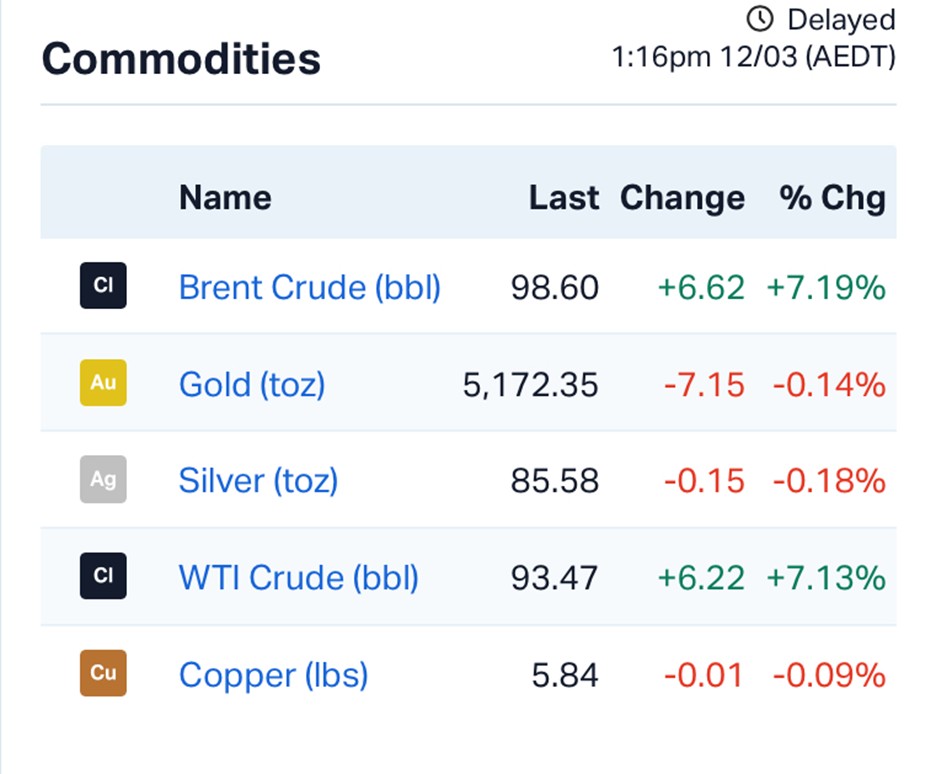
Source: MarketIndex
The narrow waterway between Iran and Oman handles roughly 20 percent of global oil shipments, according to energy market data from the U.S. Energy Information Administration.
Reports of tanker attacks and burning vessels near regional ports have raised concerns that export volumes could collapse.
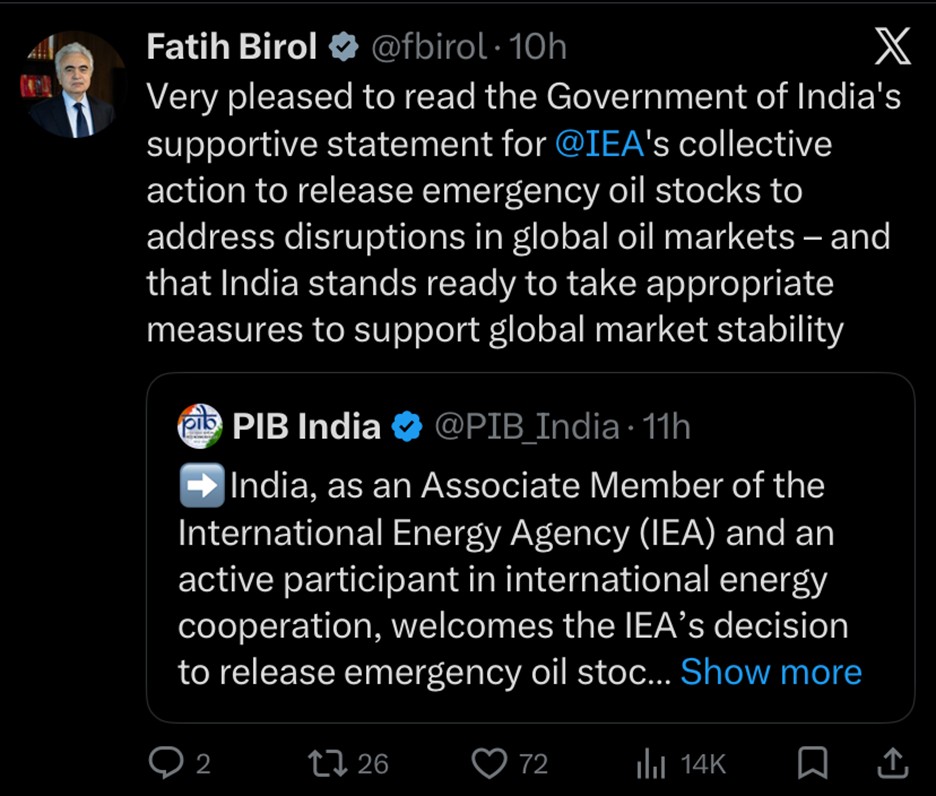
In response, IEA Executive Director Fatih Birol described the release as an unprecedented collective action by member countries.
“I am very glad that IEA member countries have responded with an emergency collective action of unprecedented size,” Birol said in a public statement.
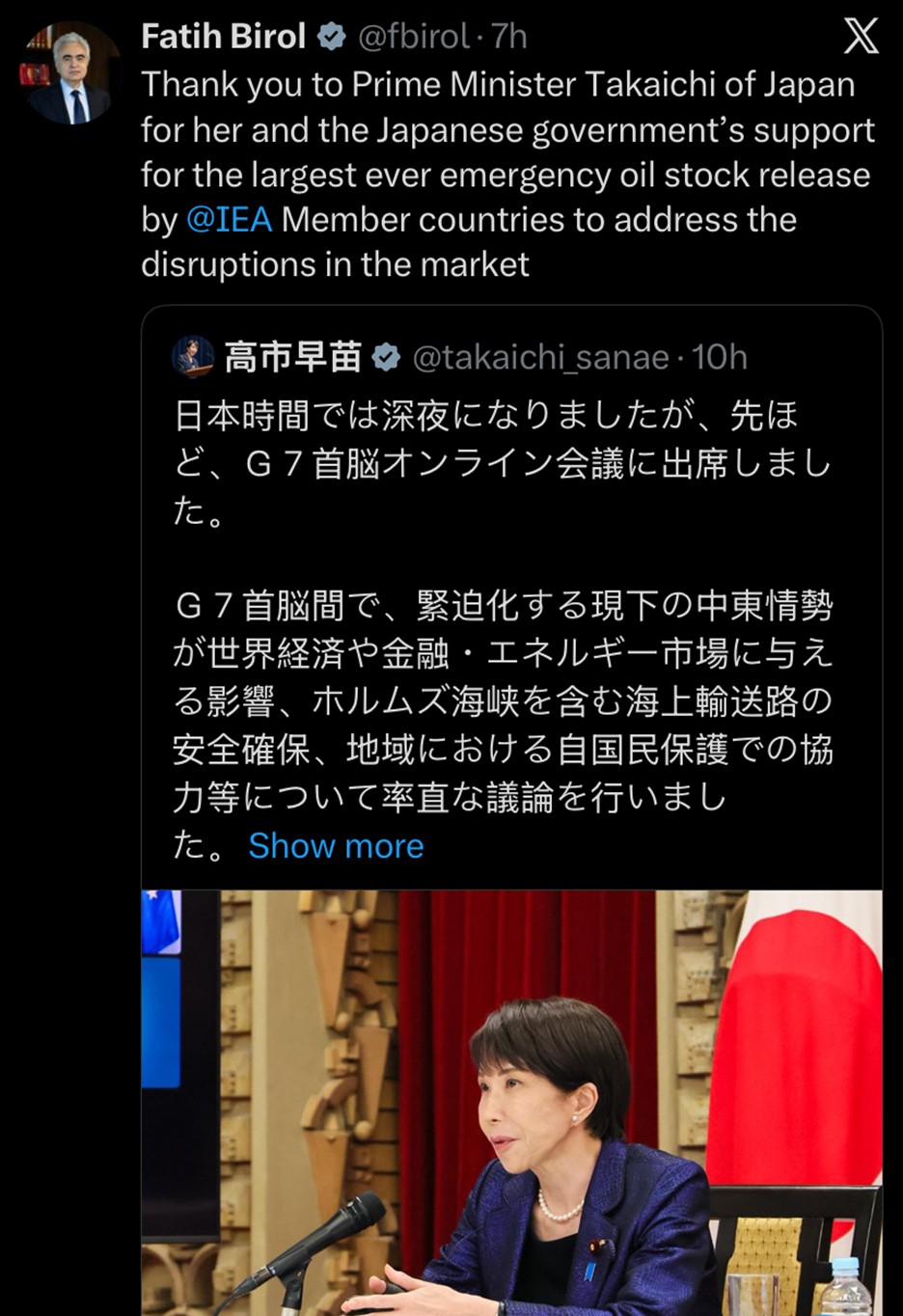
Source: Fatih Birol X Handle
But markets appear to believe that releasing oil from storage cannot replace shipments that may never reach global markets.
ASX struggles as markets flee risk
The shock reverberated across the Australian market.
Nearly all sectors were down, with technology stocks leading the losses.
The All Technology Index dropped 2.47 percent, reflecting a broader global retreat from growth stocks as interest rate expectations rise.
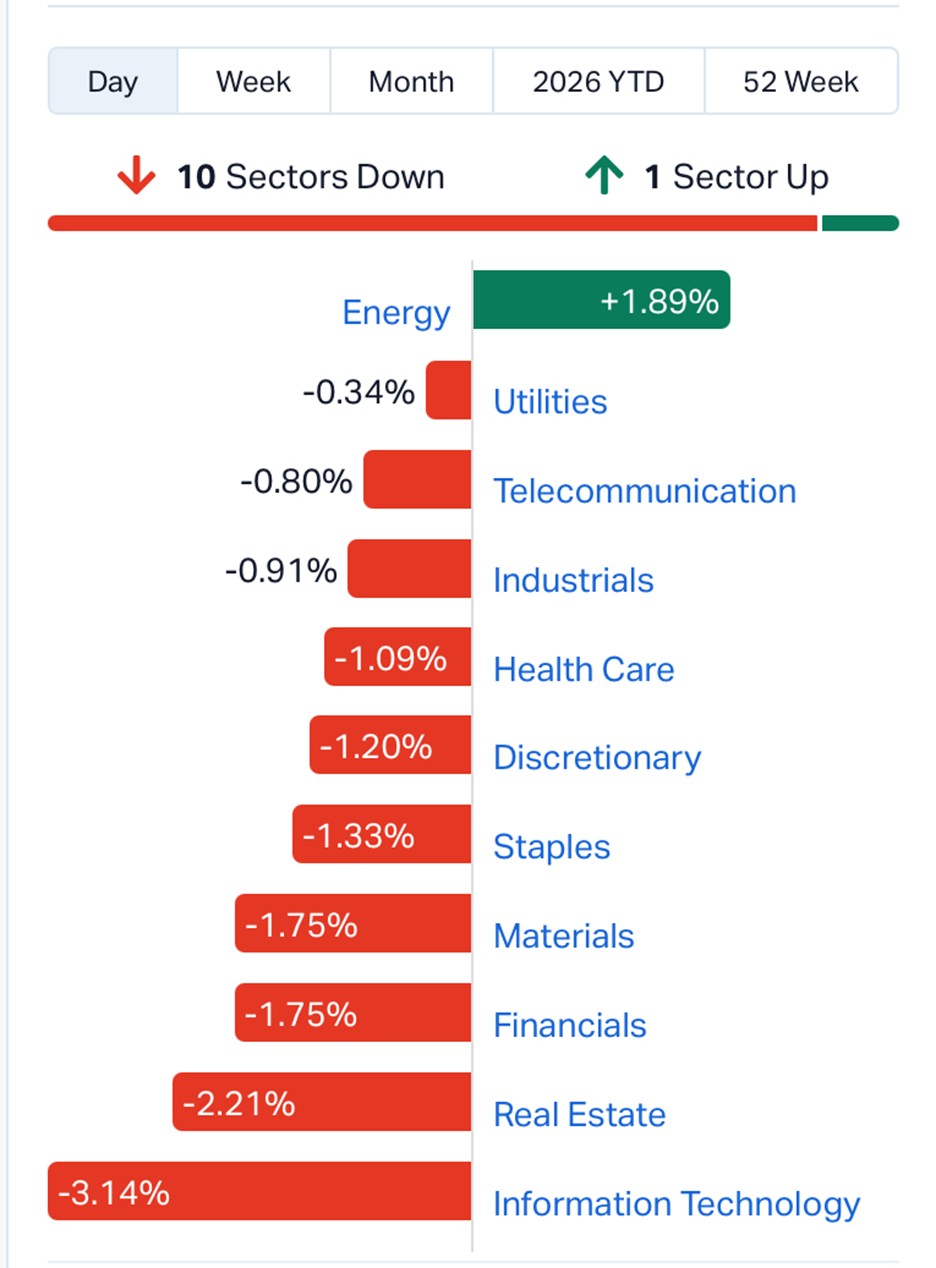
ASX Sector Snapshot | Source: MarketIndex
Banks, materials and consumer stocks also fell, dragged lower by fears that higher energy prices will slow economic activity.
Only energy companies bucked the trend.
The energy sector climbed 1.9 percent, as investors rotated into companies that benefit directly from rising oil and coal prices.
Among the standout performers:
Stock | Move | Driver |
Yancoal Australia | +6.59% | Higher coal demand amid global energy shortages |
Whitehaven Coal | +4.54% | Coal seen as alternative fuel during oil disruption |
Ampol | +3.60% | Fuel margins expand as oil prices surge |
Meanwhile, the biggest losers highlighted how quickly sentiment can shift.
IperionX plunged 15.48 percent, while retailers and technology firms were broadly sold off as investors sought safety.
Rate hike fears return
The oil spike is not just a problem for markets.
It is rapidly becoming a problem for households.
Australia’s major banks are now warning that the surge in energy prices could reignite inflation and force the Reserve Bank of Australia to tighten policy again.
If interest rates rise by 0.25 percentage points, analysts estimate repayments on a $600,000 mortgage could increase by around $91 per month.
At the same time, data from Commonwealth Bank spending trackers shows the first decline in household consumption since 2024, suggesting consumers may already be pulling back.
Economists warn that this combination of higher prices and weaker growth resembles the early stages of stagflation, a scenario that historically challenges both policymakers and markets.
A global diplomatic response
The crisis has also triggered urgent diplomatic activity.
Japan’s Prime Minister Sanae Takaichi confirmed that leaders held an emergency G7 meeting to address the growing risks to global energy markets.
“We discussed the impact of the Middle East situation on global energy markets and ensuring the safety of maritime transport routes including the Strait of Hormuz,” Takaichi said after the summit.
India also signaled support for the IEA’s intervention.
In an official statement, the Government of India said it welcomed the coordinated release of emergency oil stocks and was ready to take appropriate measures to stabilize markets.
Stay ahead of the market
The most important stories, delivered to your inbox. No noise, just what matters.
By subscribing, you agree to our Privacy Policy.
Source: X Platform
The alignment of major economies highlights how seriously governments view the current disruption.
For energy-importing nations such as Japan and India, the stability of the Strait of Hormuz is a matter of economic survival.
Why oil markets remain unconvinced
Historically, emergency oil releases have helped calm markets.
During the 1991 Gulf War and again in 2011 during the Libyan crisis, coordinated stockpile releases helped smooth temporary supply shocks.
This time appears different.
Analysts argue that the current disruption threatens shipping routes themselves, not simply production levels.
If tankers cannot safely pass through the Strait of Hormuz, stored reserves cannot fully replace lost supply.
That reality explains why oil traders remain skeptical that even the largest intervention in history can solve the crisis.
What it means for markets
For investors and households alike, the stakes are rising.
Energy prices feed directly into transport costs, manufacturing expenses and household electricity bills.
That pressure ultimately flows through to inflation, forcing central banks to consider further tightening even as economic growth slows.
In simple terms, oil is once again becoming the most powerful driver of financial markets.
And as the price of crude edges closer to the symbolic $100 per barrel mark, markets are discovering that sometimes even the world’s biggest safety nets are not enough to stop the fall.
Source: ASX market data, International Energy Agency statements, global market data, government statements from Japan and India.
What is your take on this story?
Disclaimer - Skrill Network is designed solely for educational and informational use. The content on this website should not be considered as investment advice or a directive. Before making any investment choices, it is crucial to carry out your own research, taking into account your individual investment objectives and personal situation. If you're considering investment decisions influenced by the information on this website, you should either seek independent financial counsel from a qualified expert or independently verify and research the information.