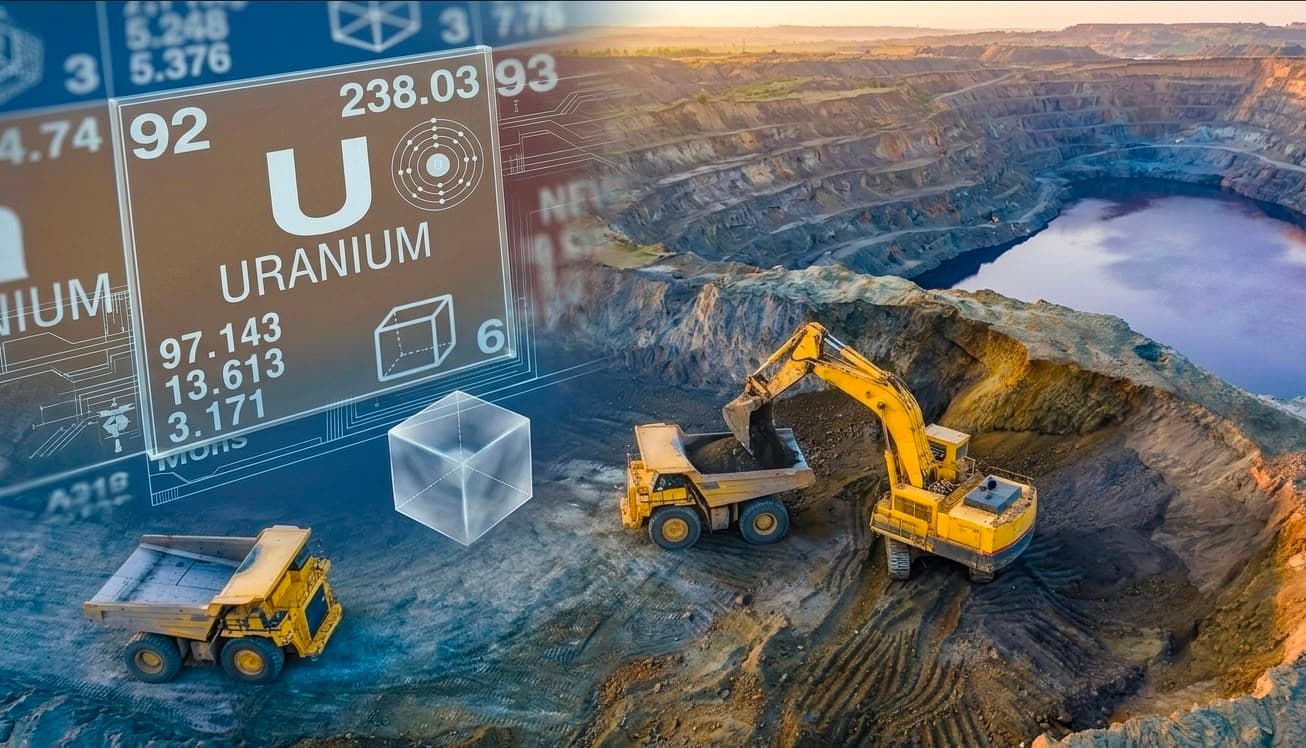


Why Trump’s $80B Nuclear Push is Recharging Uranium Stocks

Key Highlights
- Trump administration commits $80 billion to build new nuclear reactors, reigniting investor optimism in uranium
- Cameco hits all-time highs, ASX uranium stocks rally up to 18%
- Analysts say renewed U.S.-China trade cooperation and data centre demand strengthen long-term uranium fundamentals
- Sector volatility remains despite bullish outlook as production challenges persist
Uranium stocks lit up the ASX this week after the Trump administration unveiled a sweeping $80 billion plan to build new nuclear reactors in partnership with Westinghouse Electric, a move designed to meet surging power demand driven by artificial intelligence and data centres.
The announcement sent uranium shares sharply higher on both Wall Street and the ASX, marking another major milestone in what analysts are calling a “modern nuclear renaissance.”
Cameco soars to record highs
Shares in Cameco Corp (NYSE: CCJ), the world’s second-largest uranium producer, jumped 23.4% to a record high. The surge reflects investor enthusiasm for the deal, given Cameco’s 49% stake in Westinghouse, alongside Brookfield Asset Management and Brookfield Renewable Partners, which together own the remaining 51%.
Under the deal, the U.S. government will fund the initial construction of multiple Westinghouse reactors, acting as the first buyer to accelerate development and long-lead component orders. Once the projects generate profit, Washington could take an 8% equity stake in Westinghouse, with a potential IPO on the table if the company’s valuation exceeds $30 billion by 2029.
The agreement mirrors recent government investments in strategic industries such as semiconductors and steel, reflecting a broader U.S. strategy to reclaim leadership in nuclear technology and energy security.
“The administration is sending a clear signal that nuclear is central to America’s energy future,” said David Talbot, Head of Mining Research at Red Cloud Securities. “For uranium producers, this is another validation of long-term structural demand growth.”
ASX uranium players join the rally
The positive sentiment quickly spilled over to Australian markets, where ASX-listed uranium miners recorded broad-based gains. On Wednesday, local uranium stocks surged an average of 10%, with several standouts outperforming the market.
Ticker | Company | % Chg | Price | YTD |
BOE | Boss Energy | +18.55% | $1.89 | -22.43% |
PEN | Peninsula Energy | +13.39% | $0.64 | -45.24% |
AGE | Alligator Energy | +13.04% | $0.03 | -21.21% |
PDN | Paladin Energy | +12.44% | $9.04 | +19.10% |
BMN | Bannerman Energy | +11.97% | $3.46 | +22.26% |
TOE | Toro Energy | +10.59% | $0.47 | +108.89% |
NXG | NexGen Energy | +9.96% | $14.19 | +31.34% |
LOT | Lotus Resources | +9.71% | $0.19 | -4.00% |
DYL | Deep Yellow | +9.55% | $1.72 | +54.26% |
DEV | Devex Resources | +9.09% | $0.12 | +25.00% |
Delayed ASX Data
Even laggards like Boss Energy and Peninsula Energy, both down sharply earlier in the year, saw renewed buying interest as investors rotated back into the uranium theme.
A wave of bullish catalysts
The Trump-Westinghouse deal adds to a series of tailwinds that have reignited interest in nuclear power. Over the past 18 months, several key events have reinforced uranium’s role in global energy transition narratives:
- Microsoft signed a 20-year power purchase agreement to restart the Three Mile Island Unit 1 reactor in Pennsylvania (September 2024)
- Amazon Web Services invested $500 million in X-Energy Reactor Company, expanding its small modular reactor (SMR) footprint (October 2024)
- Trump’s May 2025 executive orders under the Defense Production Act strengthened the U.S. uranium supply chain
- Cameco’s August 2025 production cuts, lowering output by 19%, tightened supply and supported spot prices
According to the World Nuclear Association, global nuclear capacity is expected to increase by 87% by 2040, with nearly 450 new reactors planned or proposed worldwide.
Market reaction and short squeeze
The sudden rally also caught short sellers off guard. Hedge funds that had bet against the uranium sector were forced to unwind positions as the U.S. deal triggered one of the strongest single-day performances in years.
“Investors who were underweight uranium are now scrambling to reprice their exposure,” said Peter O’Connor, a senior mining analyst at Shaw and Partners. “What we’re seeing is both a short squeeze and a fundamental revaluation of nuclear’s place in the global energy mix.”
In the U.S., Uranium Energy Corp, Denison Mines, and Ur-Energy gained between 5% and 20%, while uranium ETFs like URA and URNM posted their best session since early 2022.
Broader geopolitical context
The deal also reflects a delicate thaw in U.S.-China relations, with both sides signaling limited cooperation on nuclear technology and trade after months of tariff disputes.
While markets initially dipped on uncertainty surrounding the talks, optimism returned after reports suggested that the new trade pact includes “strategic energy collaboration” between Washington and Beijing.
Back home, the ASX 200 closed 0.5% lower at 8,886 points, weighed down by weakness in materials, but uranium and lithium names outperformed.
Outlook: Bullish momentum with caveats
Despite the rally, analysts caution that uranium remains a volatile commodity. While demand is accelerating, supply-side issues continue to cloud the near-term outlook.
Stay ahead of the market
The most important stories, delivered to your inbox. No noise, just what matters.
By subscribing, you agree to our Privacy Policy.
Both Paladin Energy and Boss Energy have faced operational challenges at their African projects, and the pace of reactor restarts and new construction remains uneven across regions.
Still, sentiment has rarely been stronger. According to analysts at Sprott Asset Management, the uranium market is in a “multi-year structural deficit,” with global utilities likely to face tighter supply through 2030.
“The fundamentals are as strong as we’ve seen in decades,” said John Ciampaglia, CEO of Sprott Asset Management. “Uranium isn’t just benefiting from clean energy mandates anymore. It’s now tied to the AI-driven data revolution, which demands stable, carbon-free power.”
<iframe width="681" height="383" src="https://www.youtube.com/embed/RBzDRYXNPVA" title="$500 Uranium, Rotation From SPUT into URNM & URNJ, Production Issues | John Ciampaglia Interview" frameborder="0" allow="accelerometer; autoplay; clipboard-write; encrypted-media; gyroscope; picture-in-picture; web-share" referrerpolicy="strict-origin-when-cross-origin" allowfullscreen></iframe>
The road ahead
With governments, tech giants, and defense initiatives converging on nuclear energy as a strategic necessity, the sector’s long-term trajectory looks increasingly resilient.
However, analysts urge caution. “This is a volatile space, and while the fundamentals are improving, execution risks remain,” noted O’Connor. “It’s an exciting time for uranium, but not a time for complacency.”
As the U.S. and China move closer toward cooperative energy policies, and with multiple catalysts aligning, ASX uranium stocks could remain in the spotlight well into 2026.
What is your take on this story?
Disclaimer - Skrill Network is designed solely for educational and informational use. The content on this website should not be considered as investment advice or a directive. Before making any investment choices, it is crucial to carry out your own research, taking into account your individual investment objectives and personal situation. If you're considering investment decisions influenced by the information on this website, you should either seek independent financial counsel from a qualified expert or independently verify and research the information.