

Vulcan Energy (ASX: VUL) Secures Key Lithium Licence, Marking Shift Toward Production

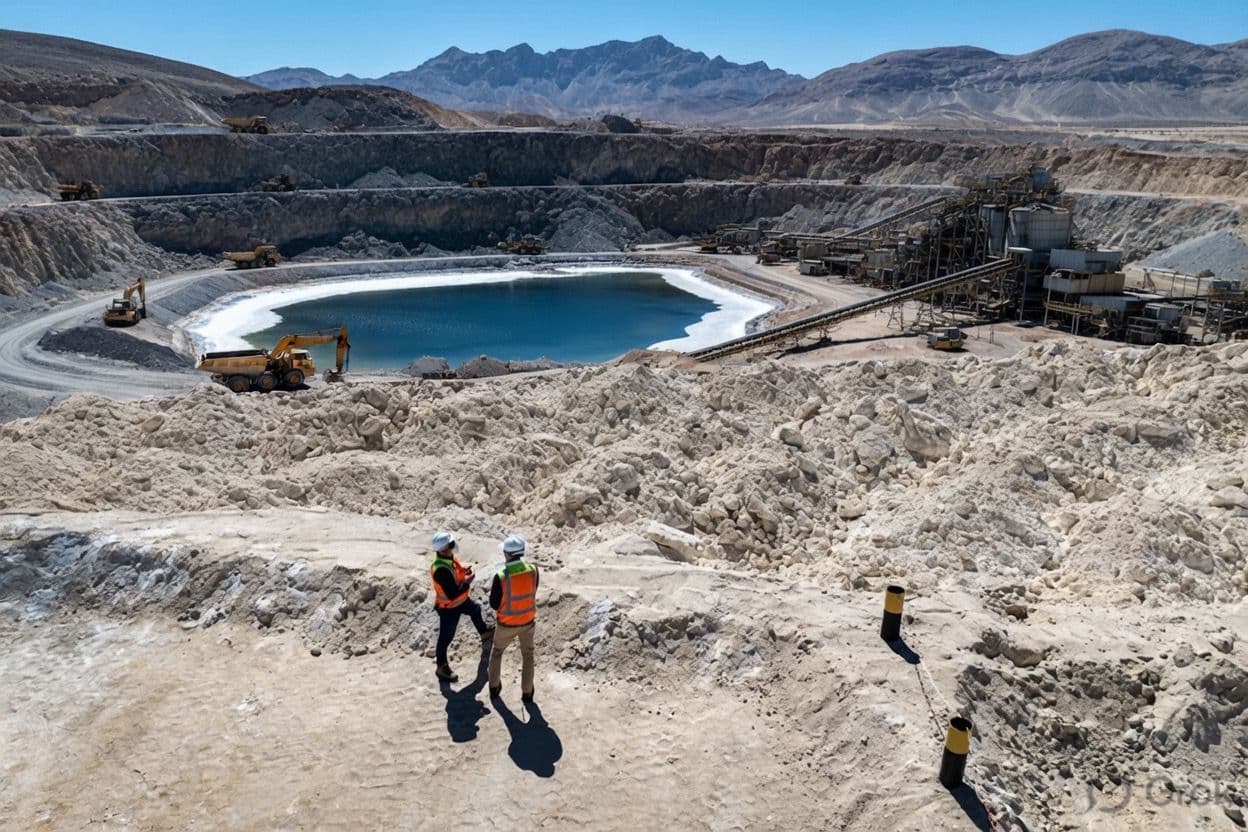
Key Highlights
- Vulcan Energy Resources Ltd secures first lithium production licence for Lionheart Project
- Licence valid for six years, enabling lithium extraction in Germany’s Upper Rhine Valley
- Milestone significantly de-risks transition from developer to producer
- Shares trade around $3.02, with market cap near $1.44 billion
- Project targets commercial lithium production by 2028
In a market distracted by interest rates and short-term volatility, one Australian lithium company has quietly taken a step that could shape its long-term future.
Vulcan Energy Resources Ltd has secured its first lithium production licence for the Lionheart Project in Germany, marking a critical transition from early-stage development toward full-scale production.
For a sector often driven by speculation, this is the kind of progress investors look for.
A licence that changes the story
The newly granted licence, known as LiThermEx, allows Vulcan to extract lithium from geothermal brines in the Upper Rhine Valley, one of Europe’s key industrial regions.
While licences can sometimes seem like routine approvals, this one carries weight.
Germany is known for its strict environmental standards, particularly when it comes to resource extraction. Securing approval in such a jurisdiction signals that the project has cleared significant regulatory hurdles.
It moves Vulcan closer to becoming a producer rather than just a developer with future plans.
Why Lionheart matters
The Lionheart Project is not a conventional lithium operation.
Instead of traditional hard-rock mining, Vulcan aims to extract lithium from geothermal brine, a process that also generates renewable energy.
This dual approach positions the company within the broader push toward low-carbon battery supply chains, an area gaining increasing attention across Europe.
According to the International Energy Agency, demand for lithium is expected to grow more than fourfold by 2030, driven by electric vehicles and energy storage systems.
At the same time, Europe is seeking to reduce reliance on imported critical minerals, particularly from China.
Projects like Lionheart are being framed as part of that strategy.
A step toward energy independence
The significance of the licence extends beyond Vulcan itself.
It ties into a larger geopolitical and industrial shift.
Europe has been actively working to secure its own supply of critical minerals, aiming to build a domestic battery ecosystem.
By producing lithium locally, Vulcan could contribute to reducing supply chain risks and supporting the region’s energy transition.
In that sense, the project is not just about mining.
It is about energy security and industrial strategy.
Market response
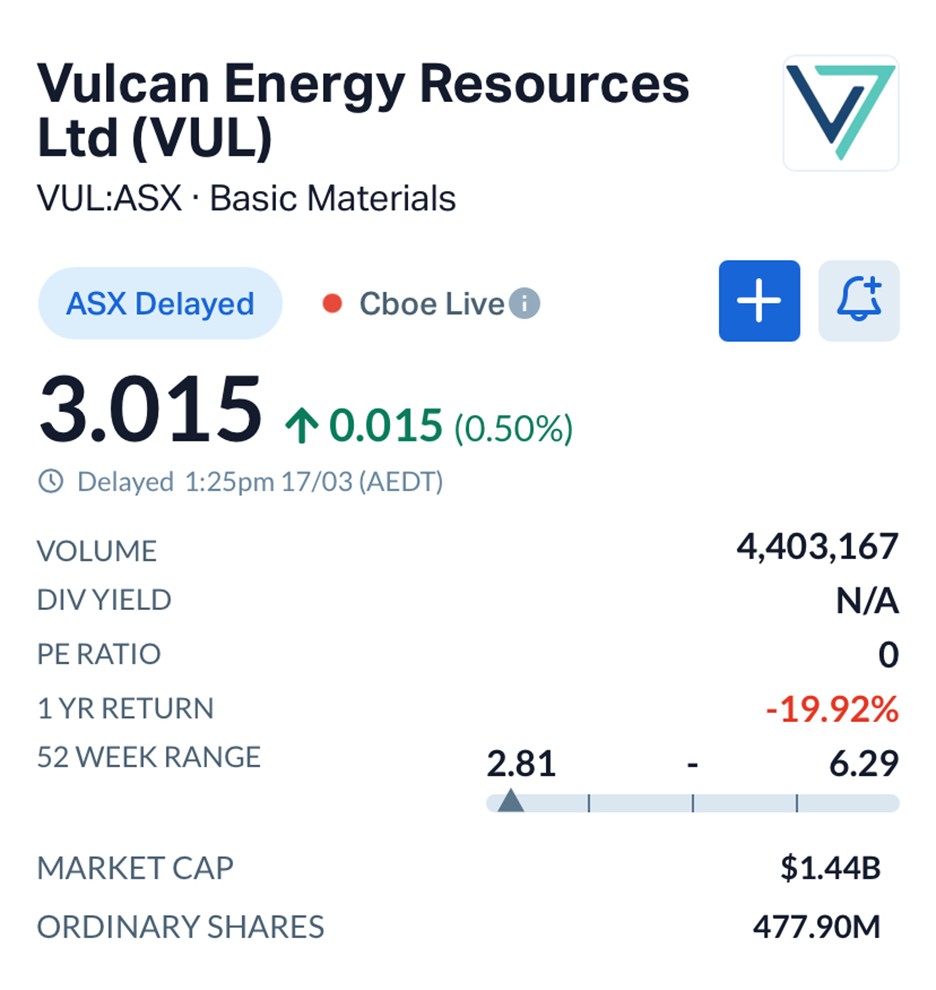
Shares in Vulcan Energy were trading around $3.02 on Tuesday afternoon, up modestly on the day.
Source: MarketIndex
The company currently holds a market capitalisation of approximately $1.44 billion, reflecting both its growth potential and the risks associated with project development.
Over the past year, the stock has declined nearly 20 percent, highlighting the broader volatility in lithium markets as prices have cooled from recent highs.
Stay ahead of the market
The most important stories, delivered to your inbox. No noise, just what matters.
By subscribing, you agree to our Privacy Policy.
However, milestones such as this licence approval can play a key role in rebuilding investor confidence.
From concept to reality
For many resource companies, the biggest challenge is bridging the gap between discovery and production.
That journey often involves years of technical studies, regulatory approvals and funding decisions.
Vulcan’s latest update suggests that the Lionheart Project is progressing along that path.
The company is targeting commercial production by 2028, although timelines in the resource sector can shift depending on market conditions and project execution.
The bigger picture
The lithium sector has gone through cycles of boom and correction over the past decade.
What remains consistent is the underlying demand driven by electrification and energy storage.
While short-term price movements can influence sentiment, long-term trends continue to point toward increased consumption of battery materials.
In that context, projects that move closer to production tend to stand out.
Source: Vulcan Energy ASX announcement, International Energy Agency lithium demand outlook.
What is your take on this story?
Disclaimer - Skrill Network is designed solely for educational and informational use. The content on this website should not be considered as investment advice or a directive. Before making any investment choices, it is crucial to carry out your own research, taking into account your individual investment objectives and personal situation. If you're considering investment decisions influenced by the information on this website, you should either seek independent financial counsel from a qualified expert or independently verify and research the information.